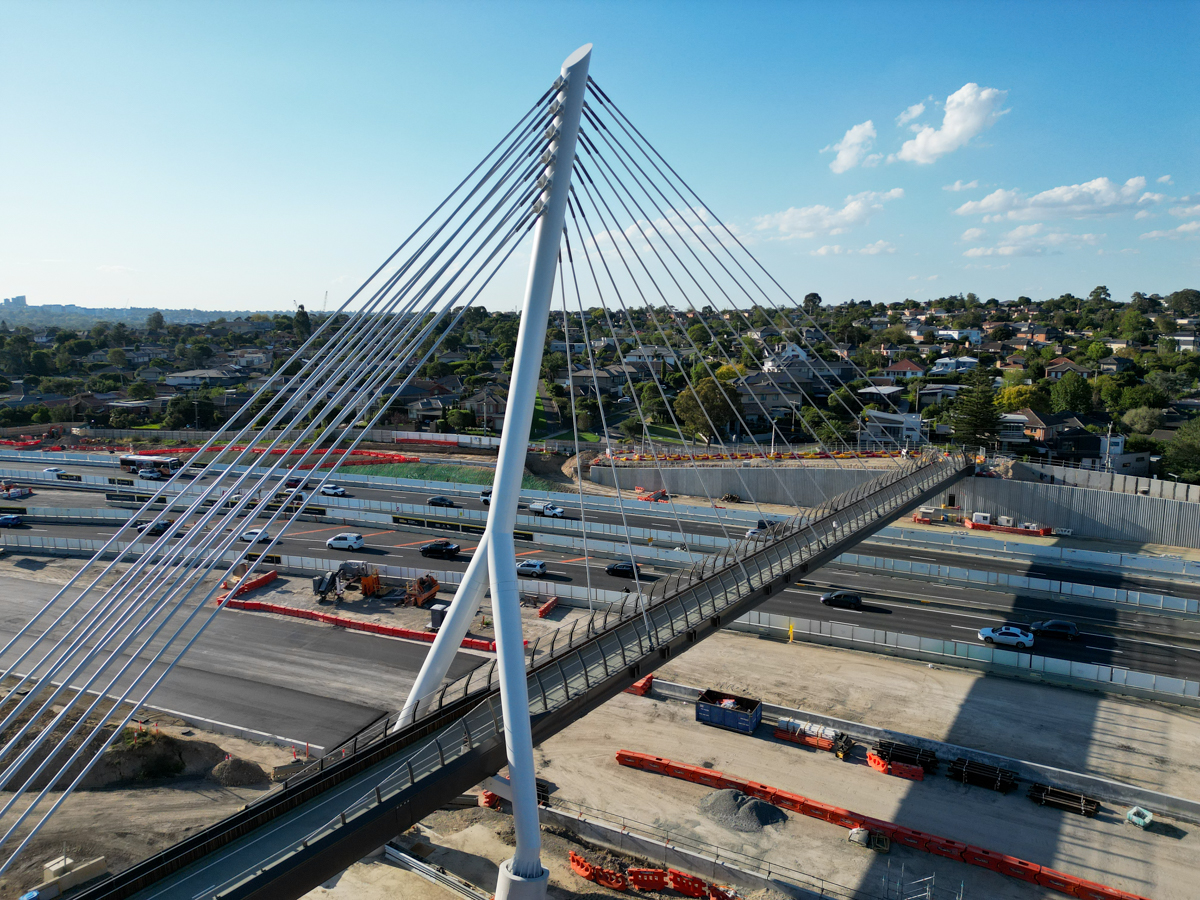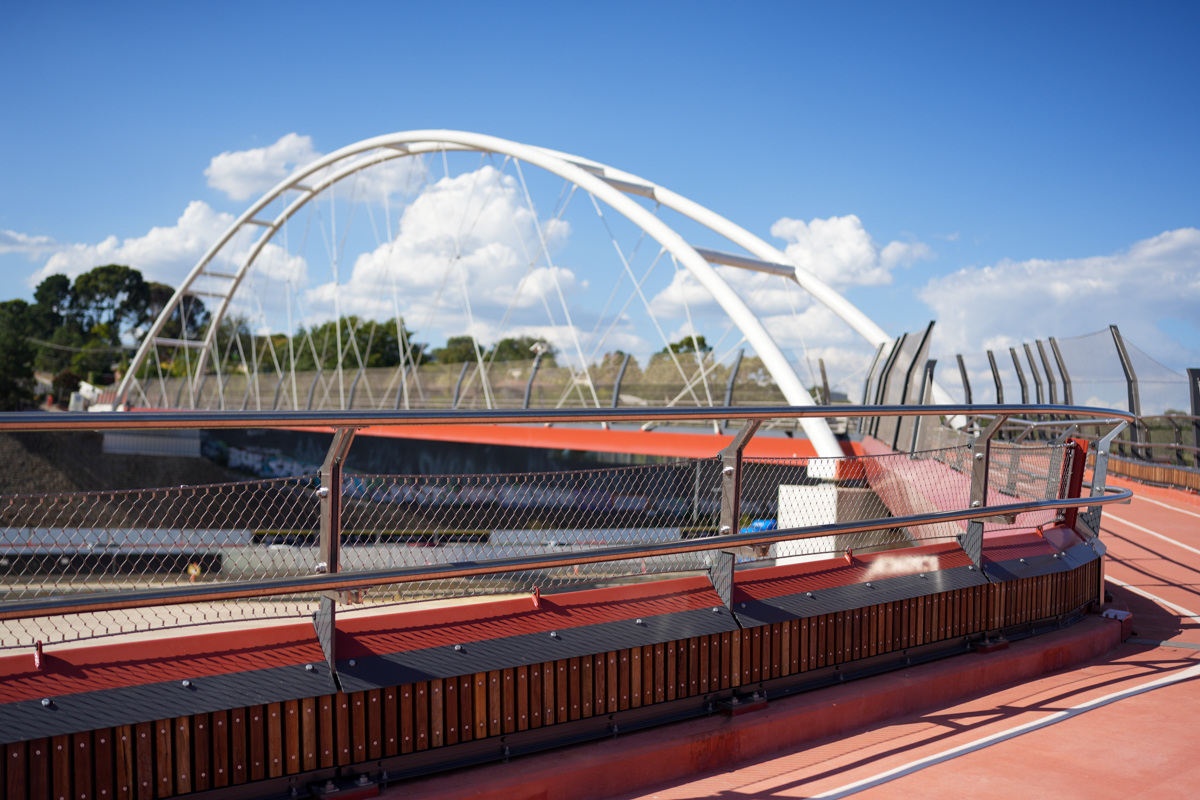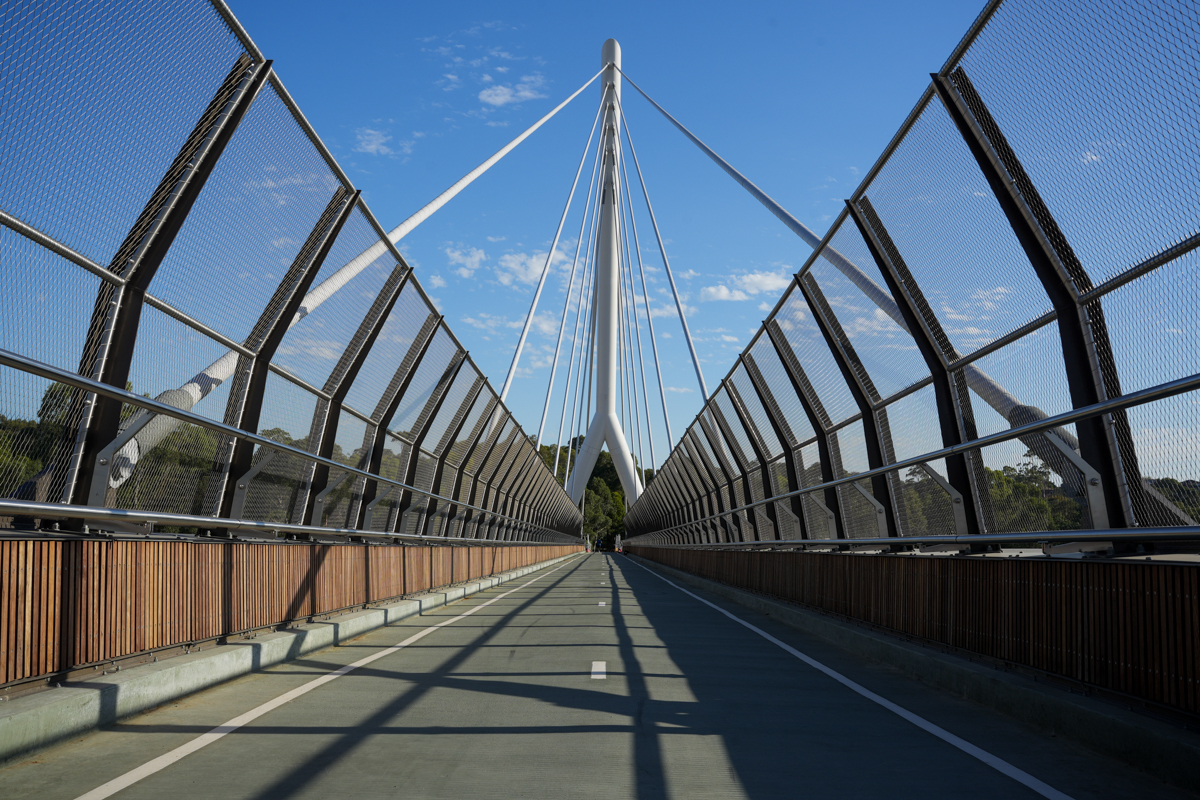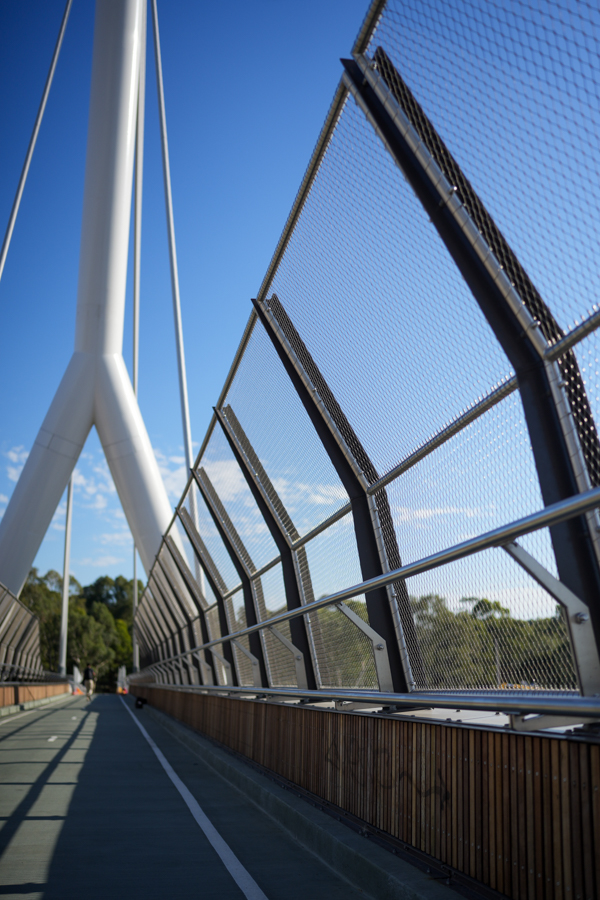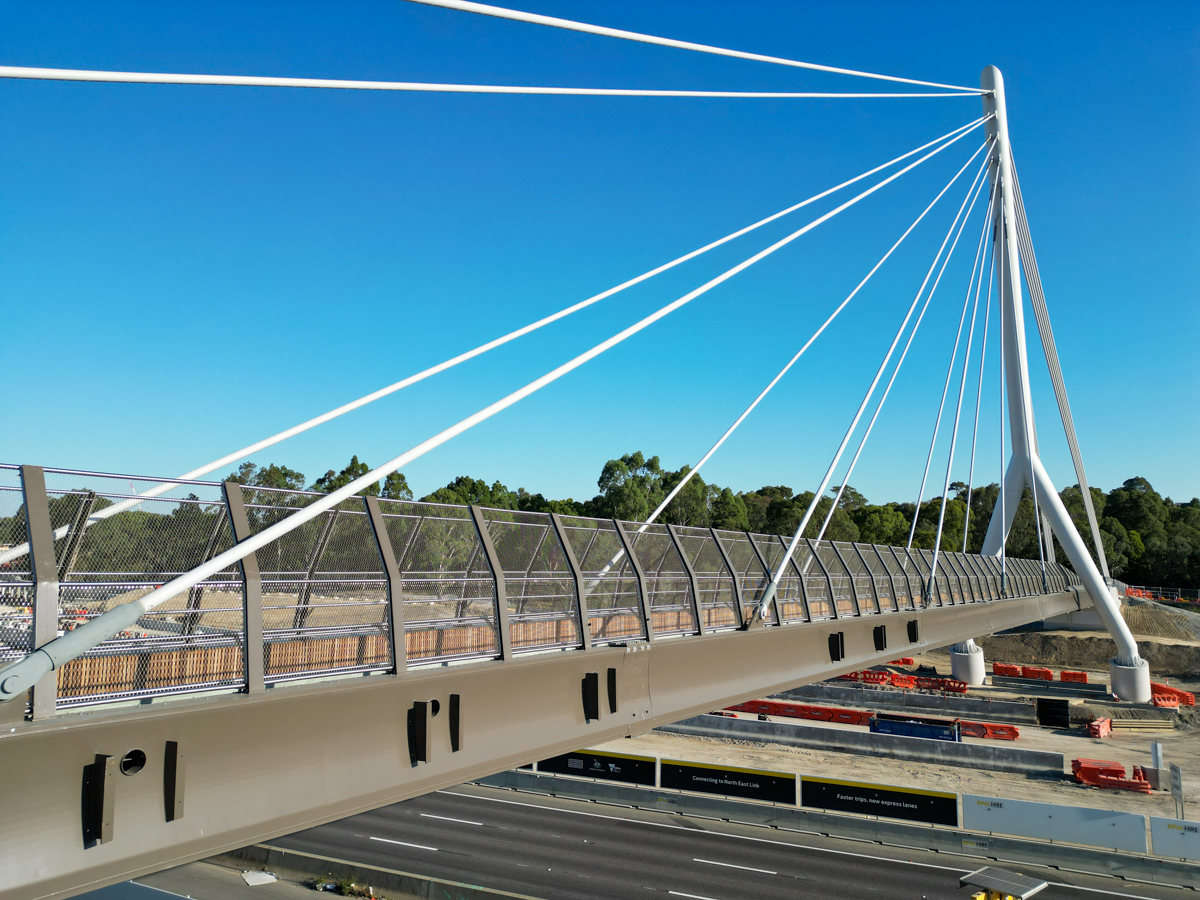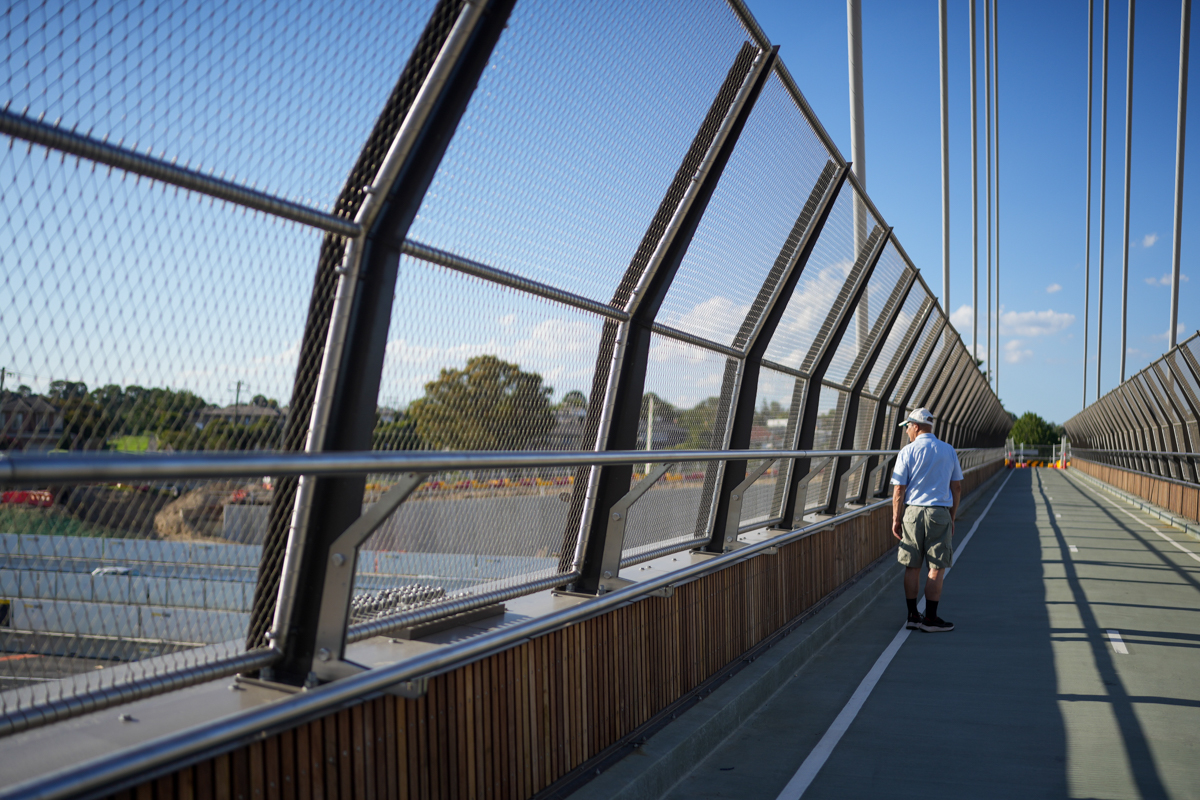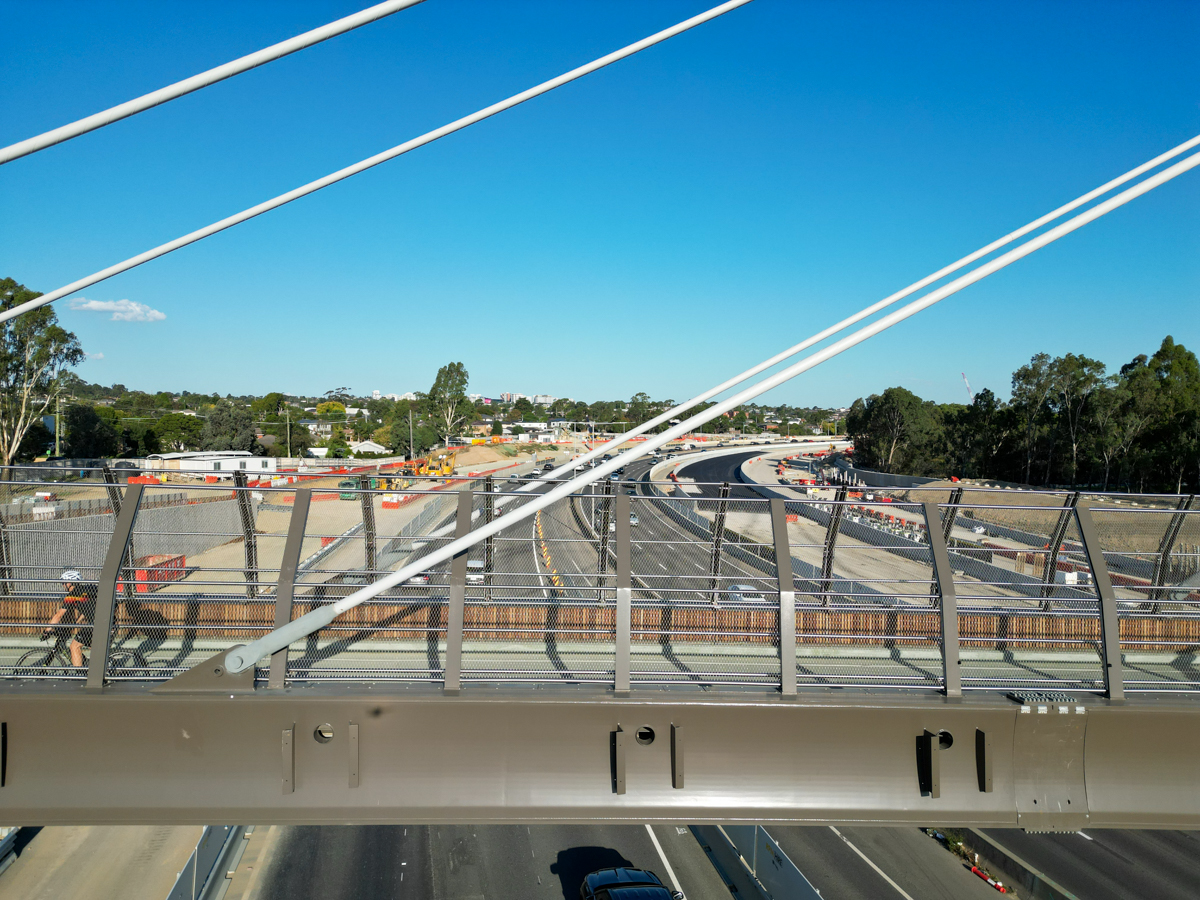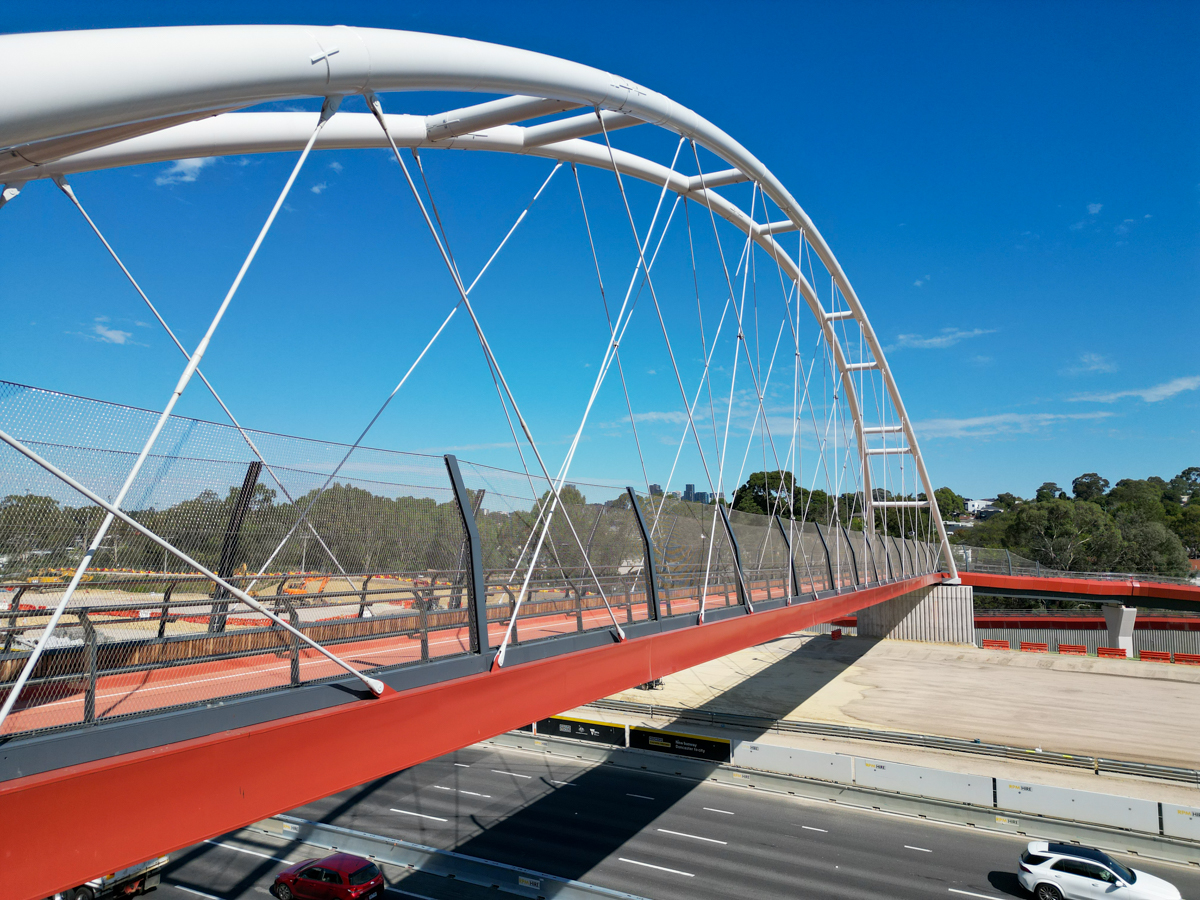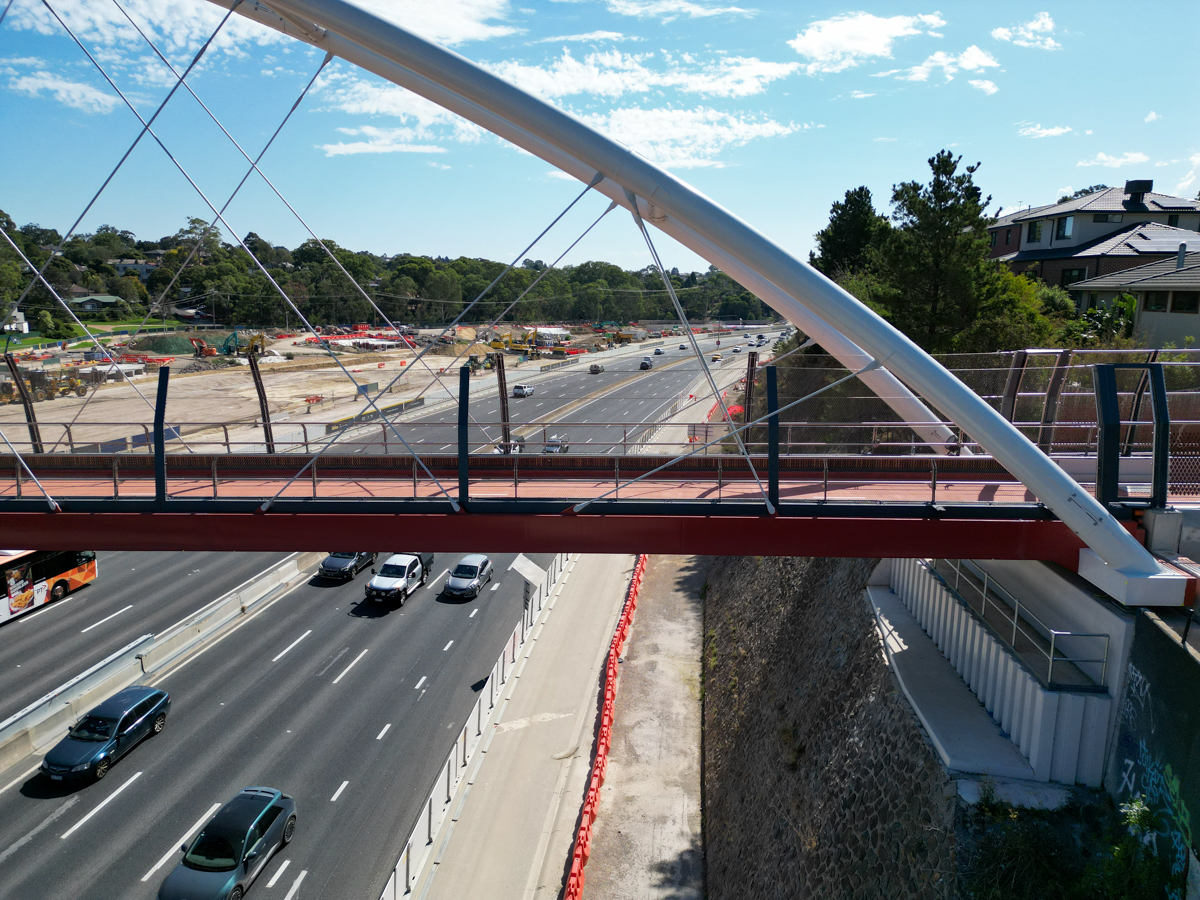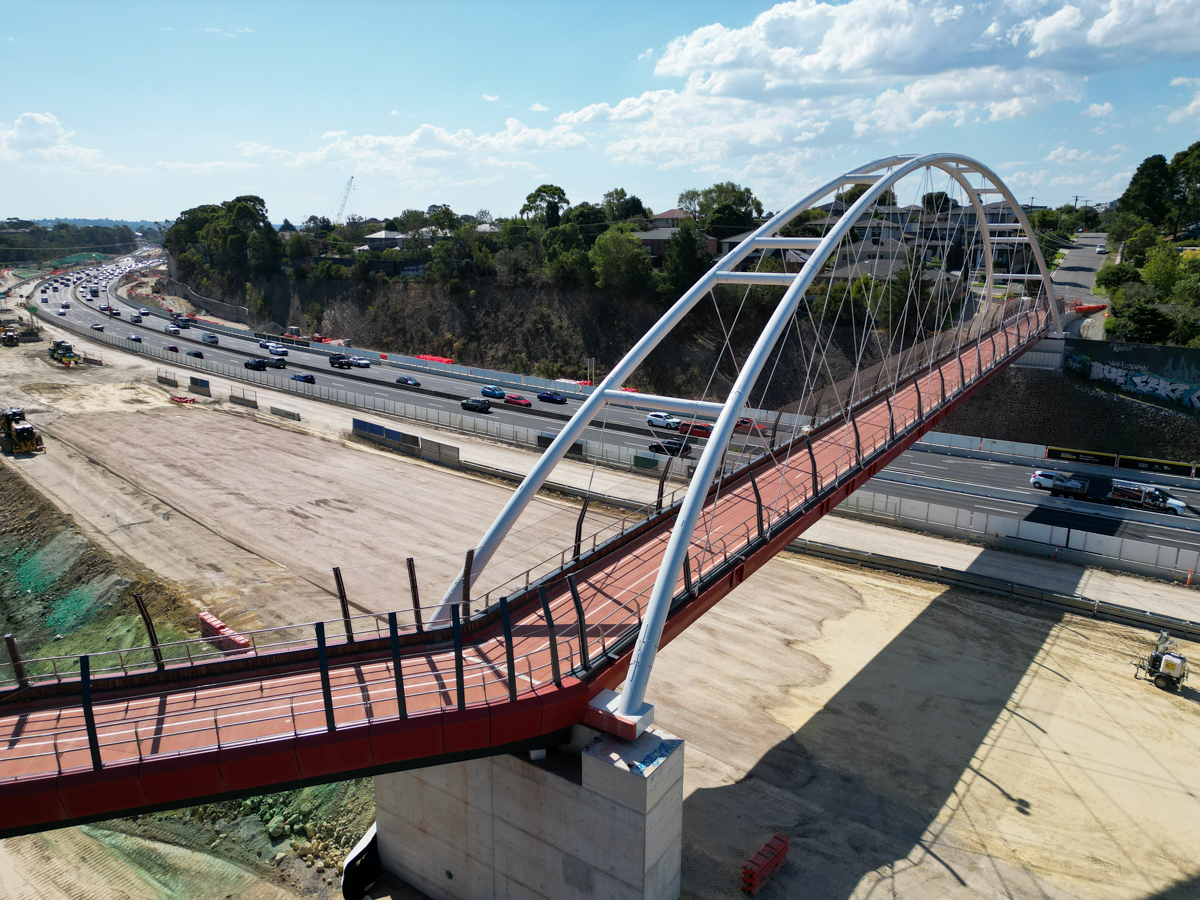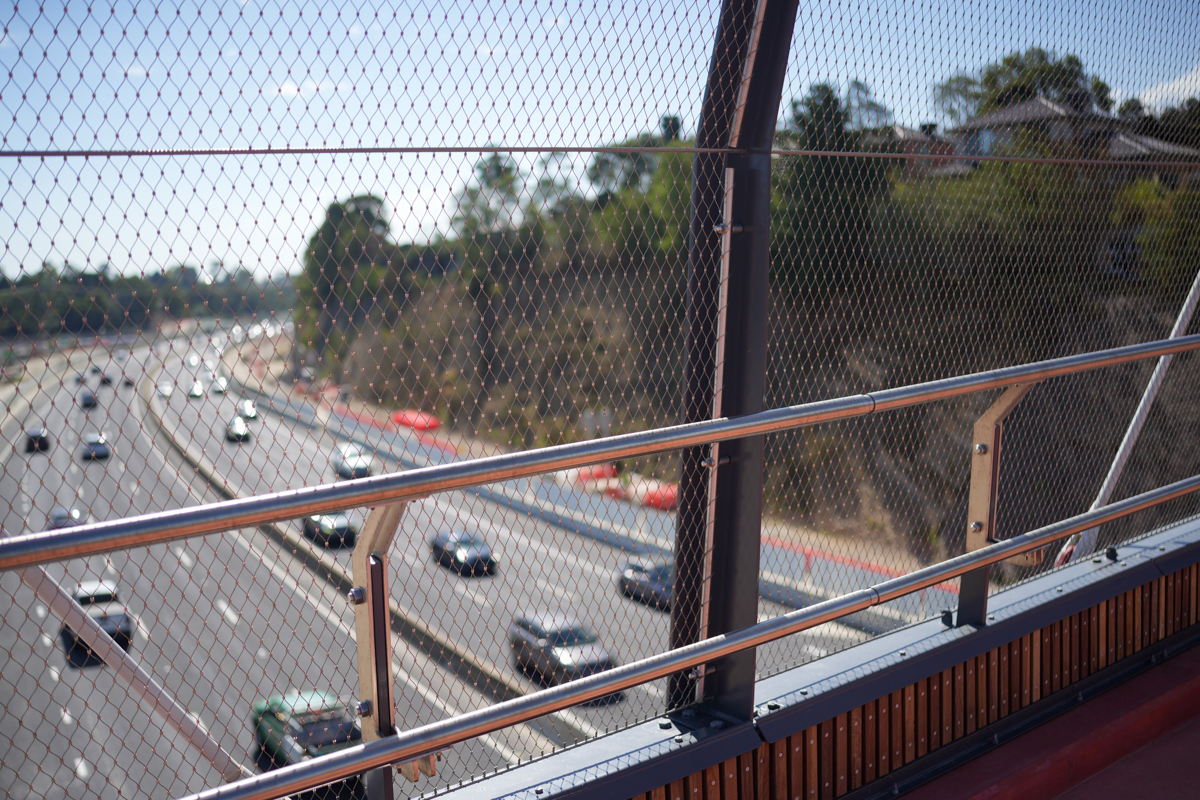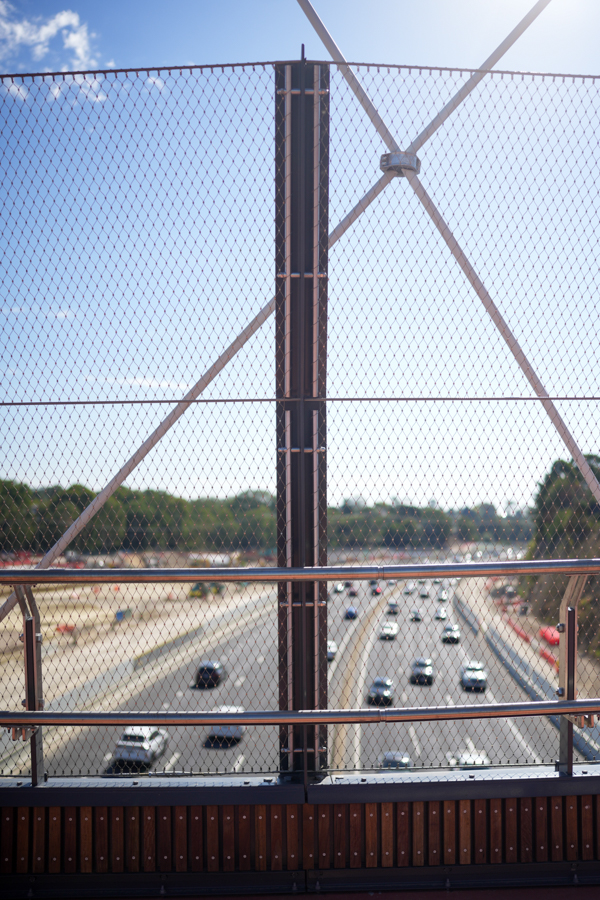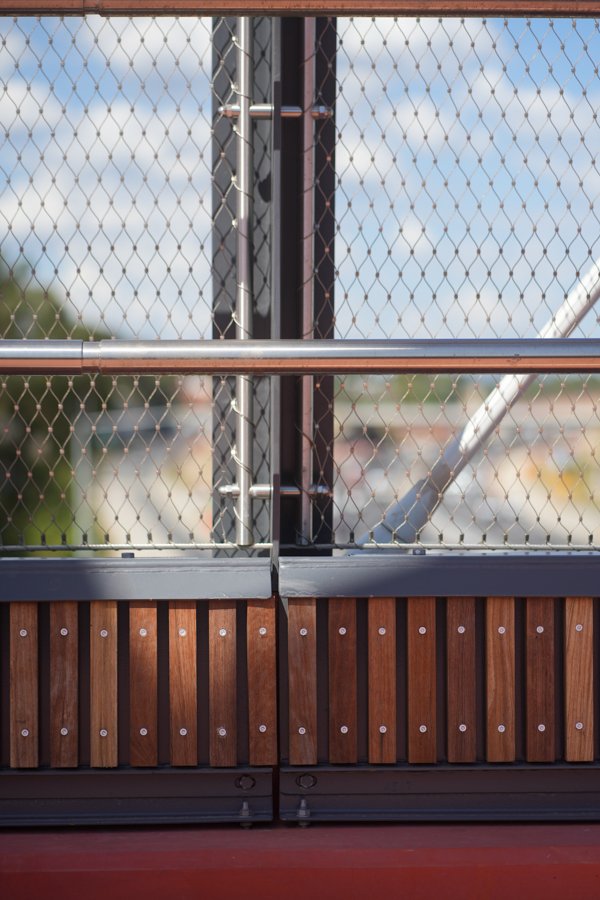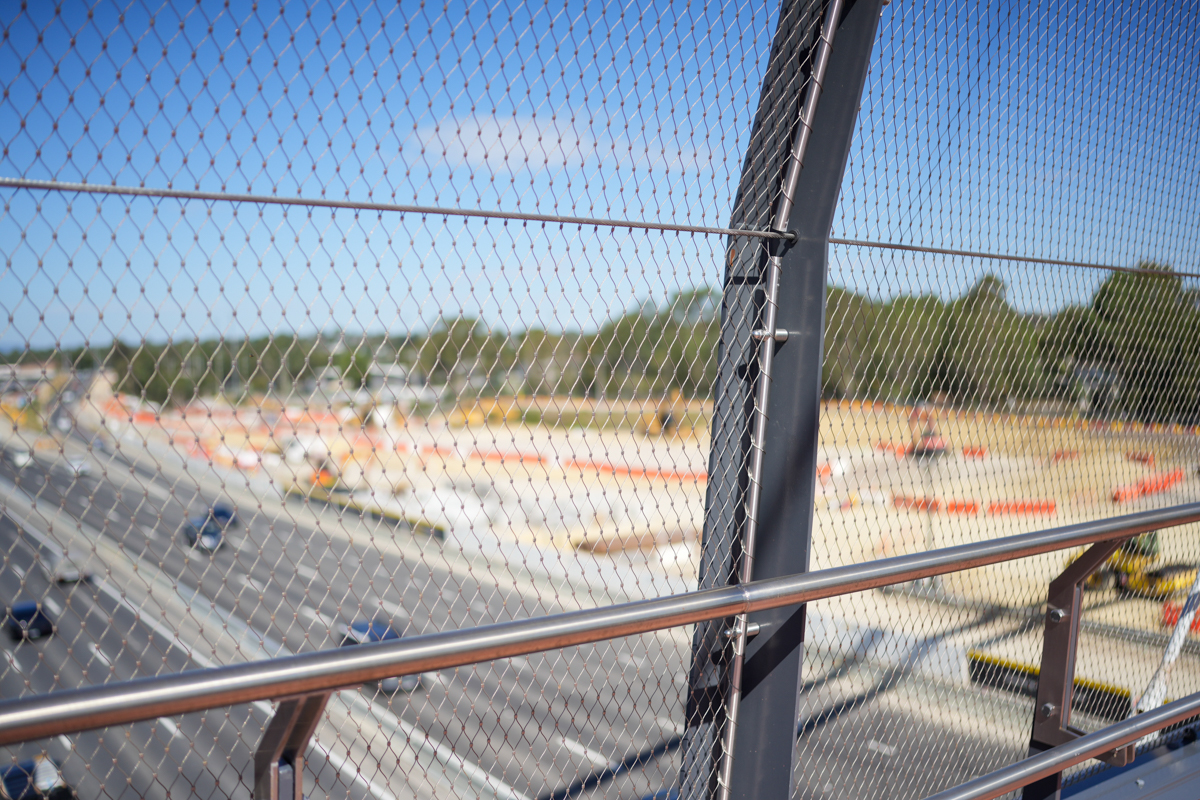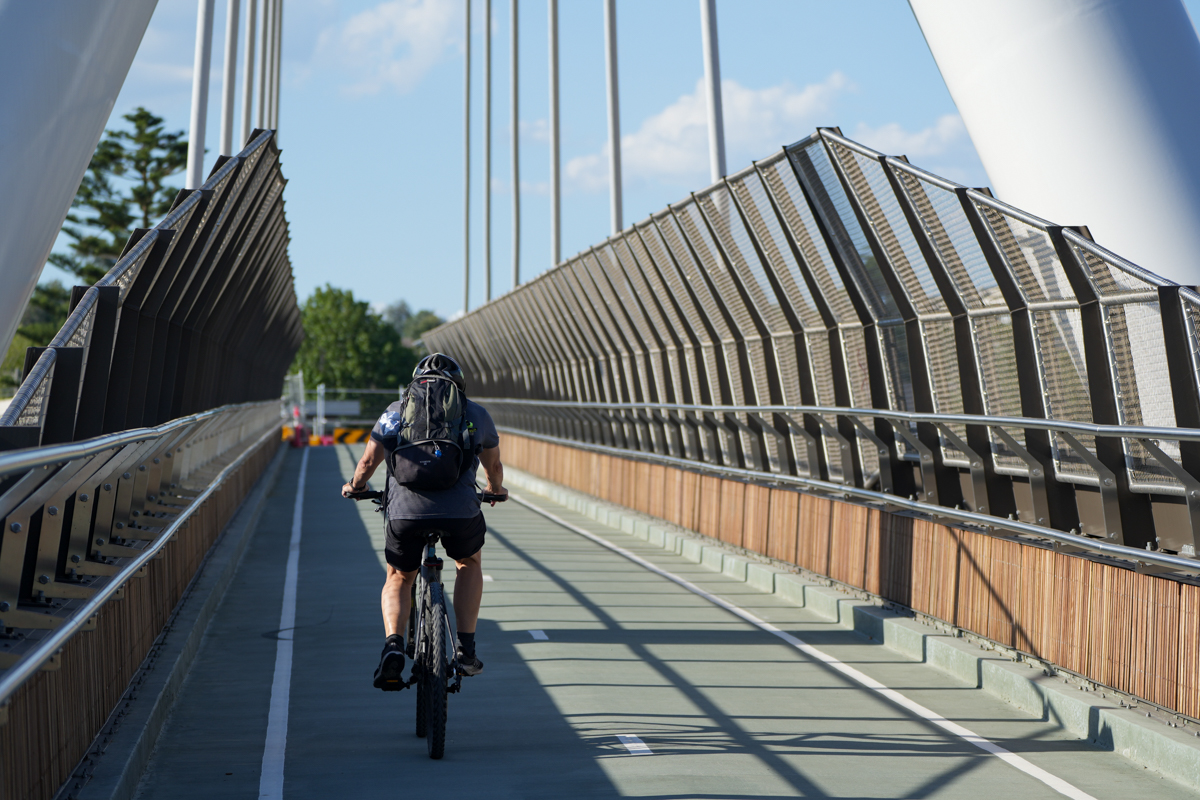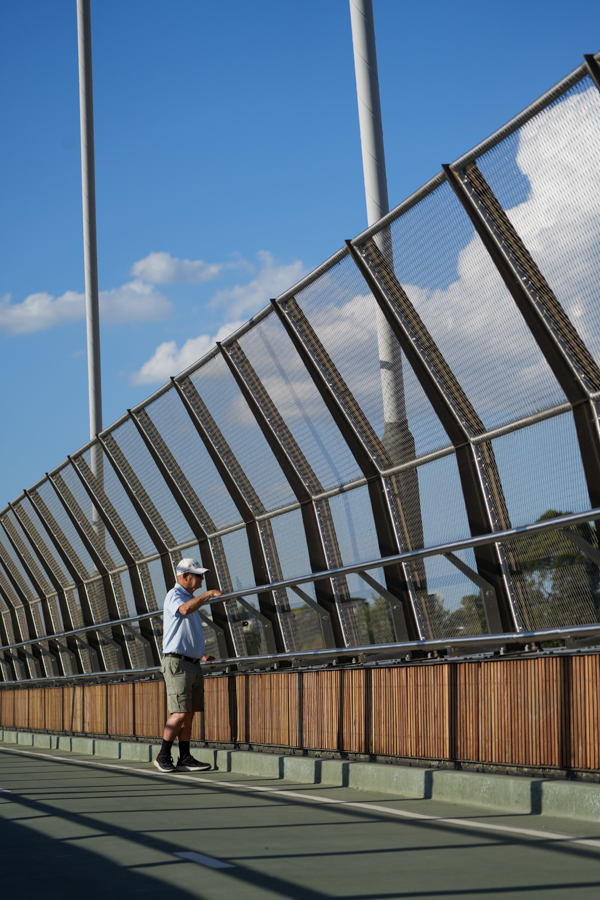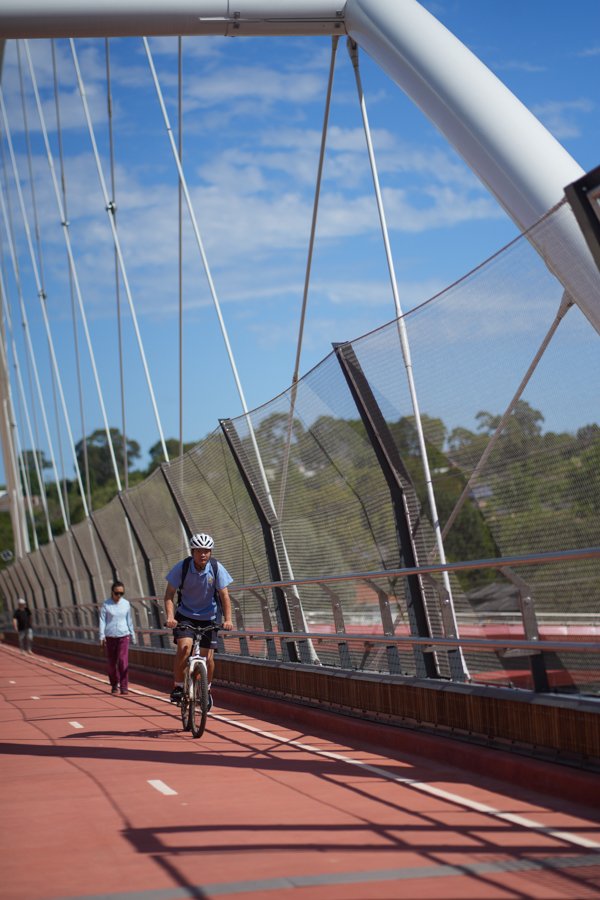

As part of Melbourne’s landmark North East Link Freeway Upgrade, Tensile was engaged to design and construct the pedestrian bridge barriers for two new crossings — Estelle and Heyington. Working alongside Kyriacou Architects, both barriers feature our Webnet stainless steel wire rope mesh as the primary infill, specified at 35mm × 1.5mm, delivering the transparency, durability, and refined aesthetic that defines Tensile’s approach to infrastructure barrier design. Beyond that shared foundation, however, the two bridges tell very different structural stories.
Estelle Bridge — Prefabricated Frame System
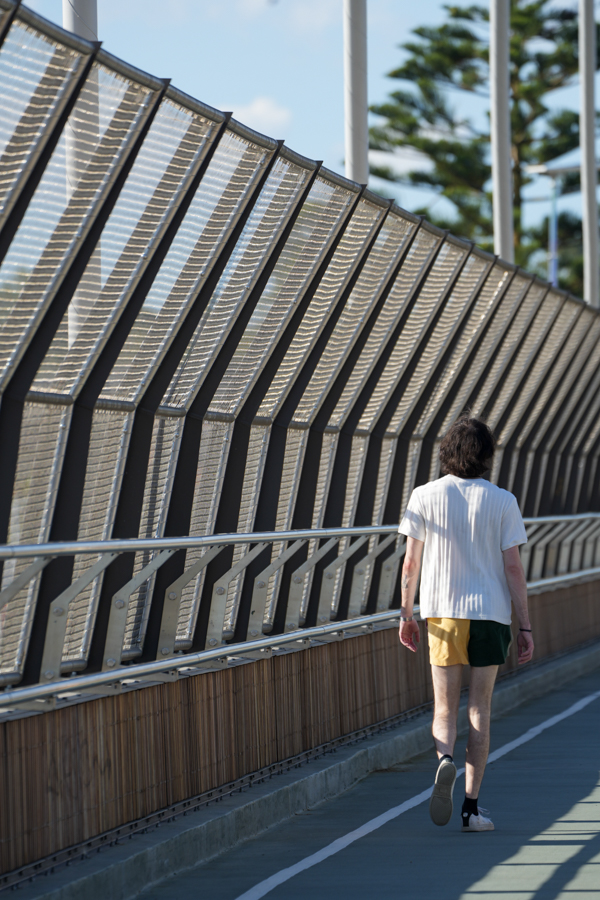
Estelle’s pedestrian bridge barrier is built around a series of custom stainless steel tubular frames carrying the Webnet mesh infill. The frames were designed with a sculptural form — functional in performance, considered in appearance.
The key advantage of this approach was logistical. Each frame was pre-laced with Webnet mesh in our workshop before arriving on site, arriving as a complete, finished unit. Because the barriers were fully assembled off-site, they could be installed directly onto the bridge deck prior to the deck being lifted into its final position. This construction sequence dramatically reduced time and complexity on site — a critical consideration on a project of this scale and programme intensity.
Posts are positioned at 2m centres, providing a robust, closely-detailed barrier that suits the character of the crossing.
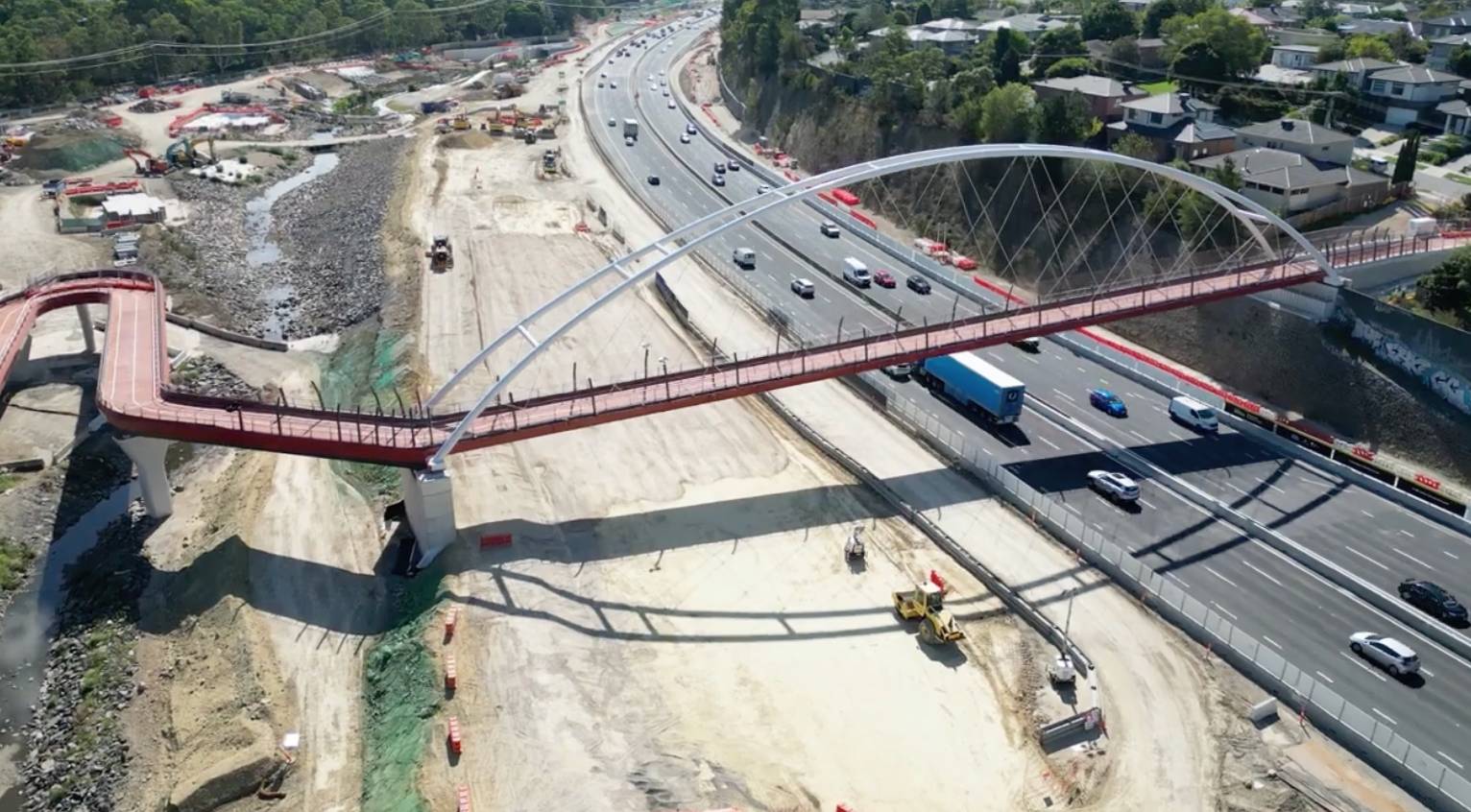
Heyington Bridge — Long-Span Cable System
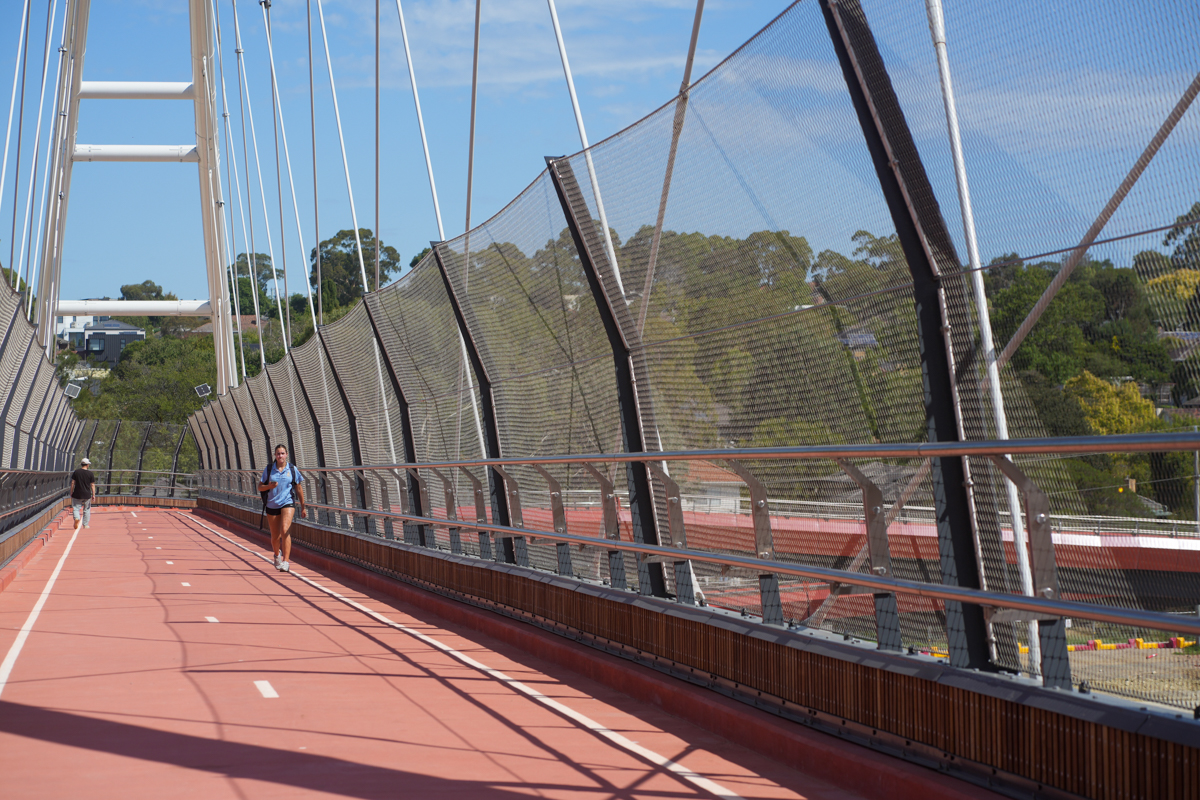
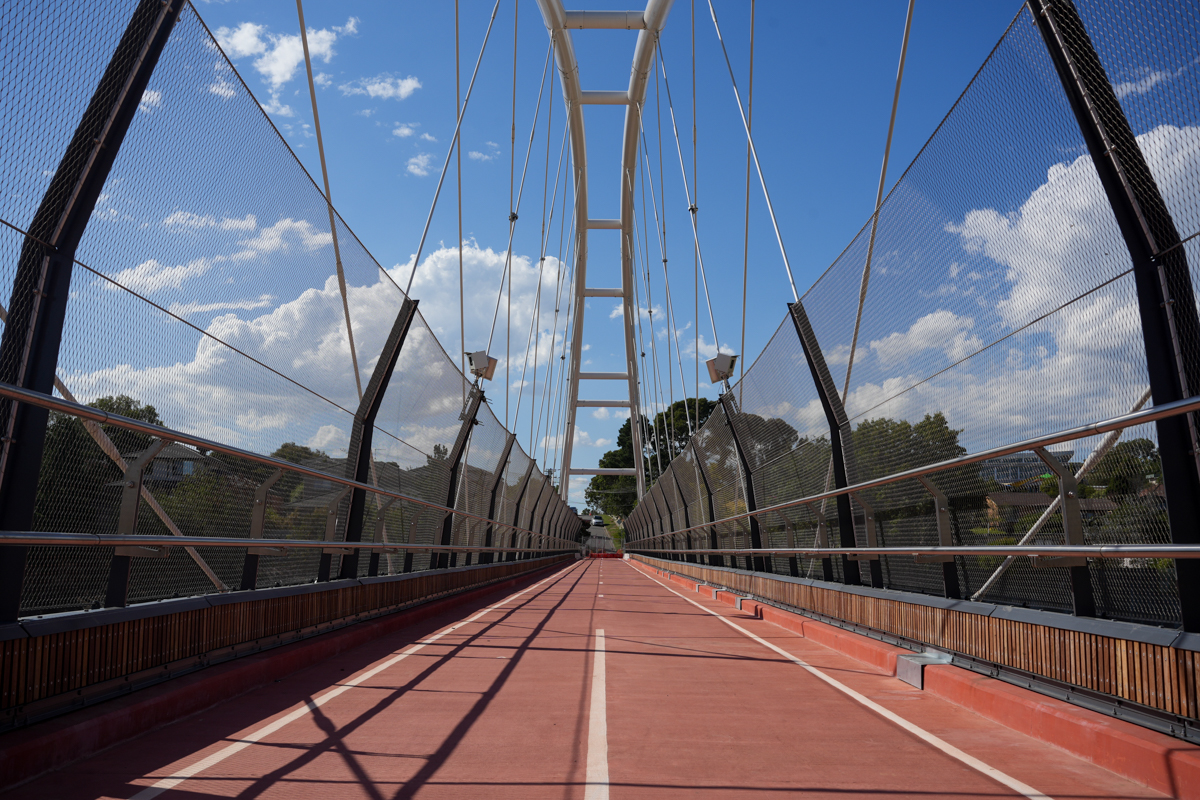
Heyington presented an opportunity to push the stainless steel mesh barrier design further — and working with Kyriacou Architects, the result is one of the most structurally refined pedestrian bridge barriers in Tensile’s portfolio.
Rather than tubular frames, the Webnet mesh at Heyington is supported by a system of perimeter stainless steel cables, with posts at 6m centres — three times the spacing of Estelle. This seemingly simple change in structural logic has three significant consequences:
1. Aesthetics With two-thirds of the standard posts removed, the lightweight mesh barrier becomes far more open and permeable in appearance. The Webnet reads almost as a suspended plane, offering largely unobstructed views and a delicacy rarely achieved in infrastructure of this type. The barrier disappears into the bridge rather than defining it.
2. Structural weight Reducing post frequency from 2m to 6m centres removes a substantial amount of steel from the structure. On a bridge, dead load directly influences the sizing of beams, connections, and foundations. Reducing the barrier weight has a cascading benefit through the entire bridge structure.
3. Cost efficiency The reduction in material and structural complexity delivers savings not only within Tensile’s scope of work, but across the bridge project as a whole. A lighter cable-supported mesh barrier means a lighter bridge, and a lighter bridge costs less to build. Heyington demonstrates that considered design thinking in one component can deliver value well beyond its own budget line.
Webnet Stainless Steel Mesh
Both bridges use Tensile’s Webnet stainless steel wire rope mesh, specified at 35mm × 1.5mm. Webnet is highly regarded in infrastructure and pedestrian bridge barrier applications for its strength, corrosion resistance, and visual lightness. Its open weave structure provides compliant infill while maintaining sightlines and a sense of openness that solid or bar-filled panels cannot match. Grade 316 stainless steel construction ensures long-term performance in exposed environments with minimal maintenance.
Working on a similar project?
Whether you’re designing a pedestrian bridge barrier, an elevated walkway, or a complex infrastructure application, Tensile’s team can help you find a stainless steel mesh solution that balances structural performance, programe requirements, and design quality. Enquire about your project →