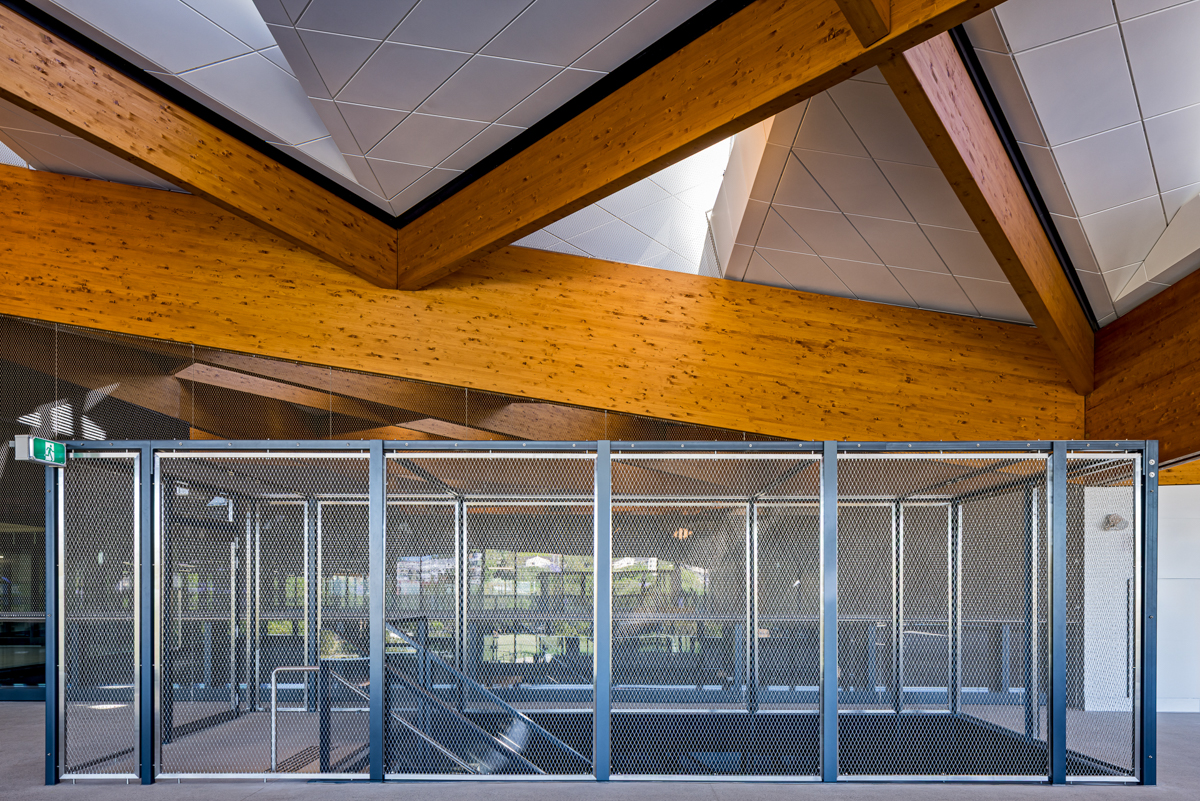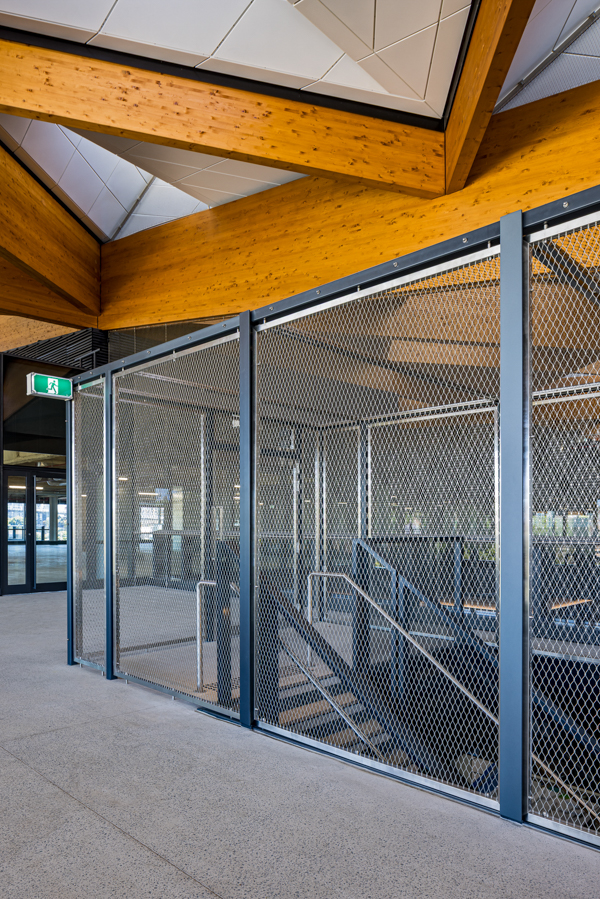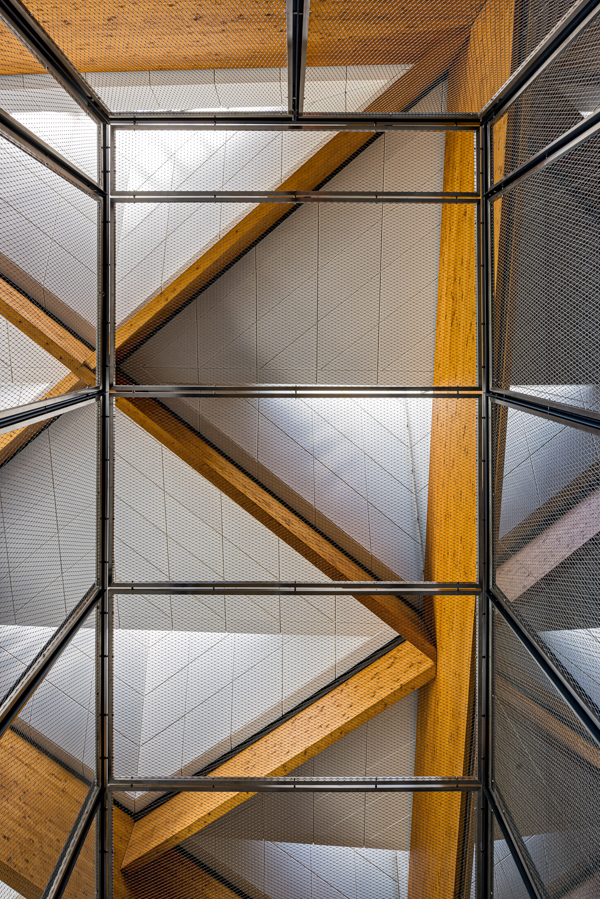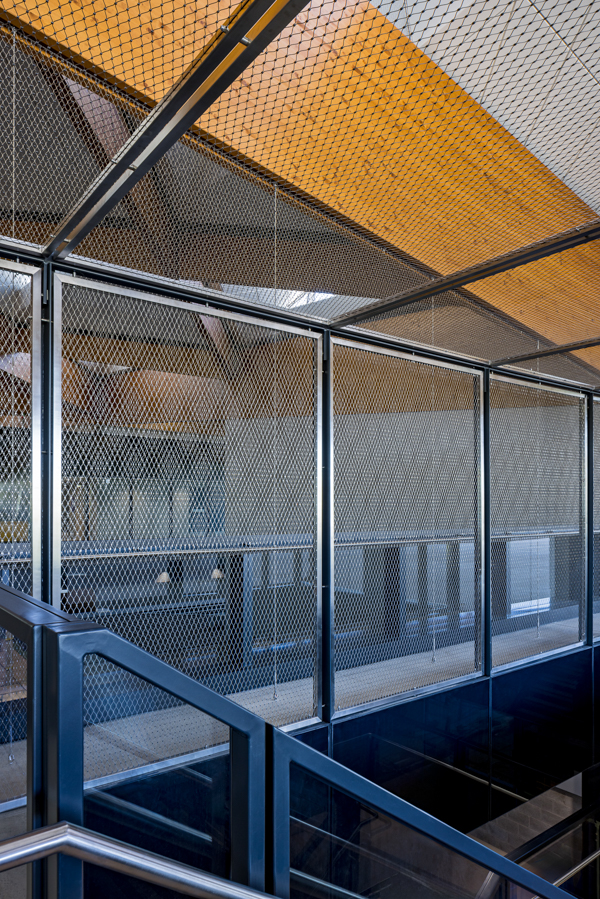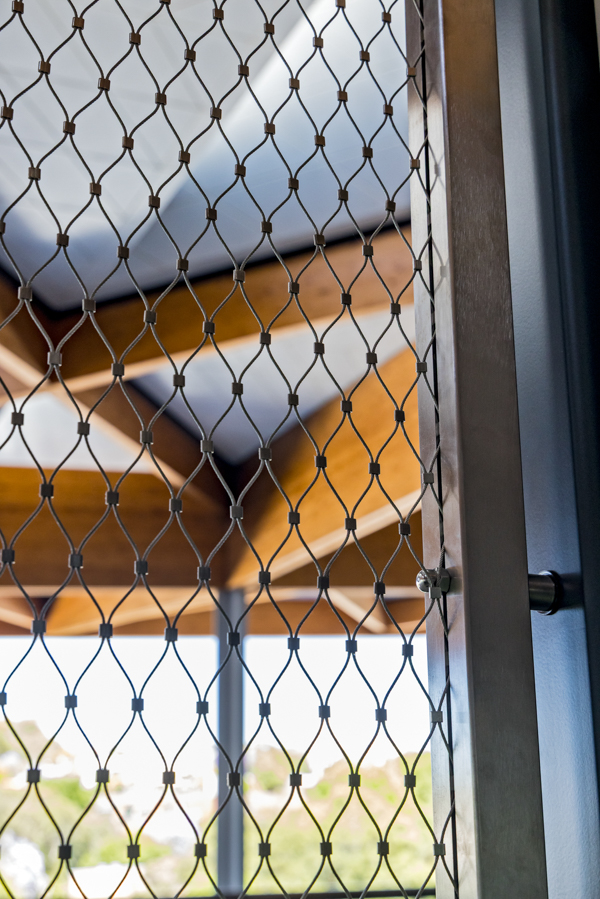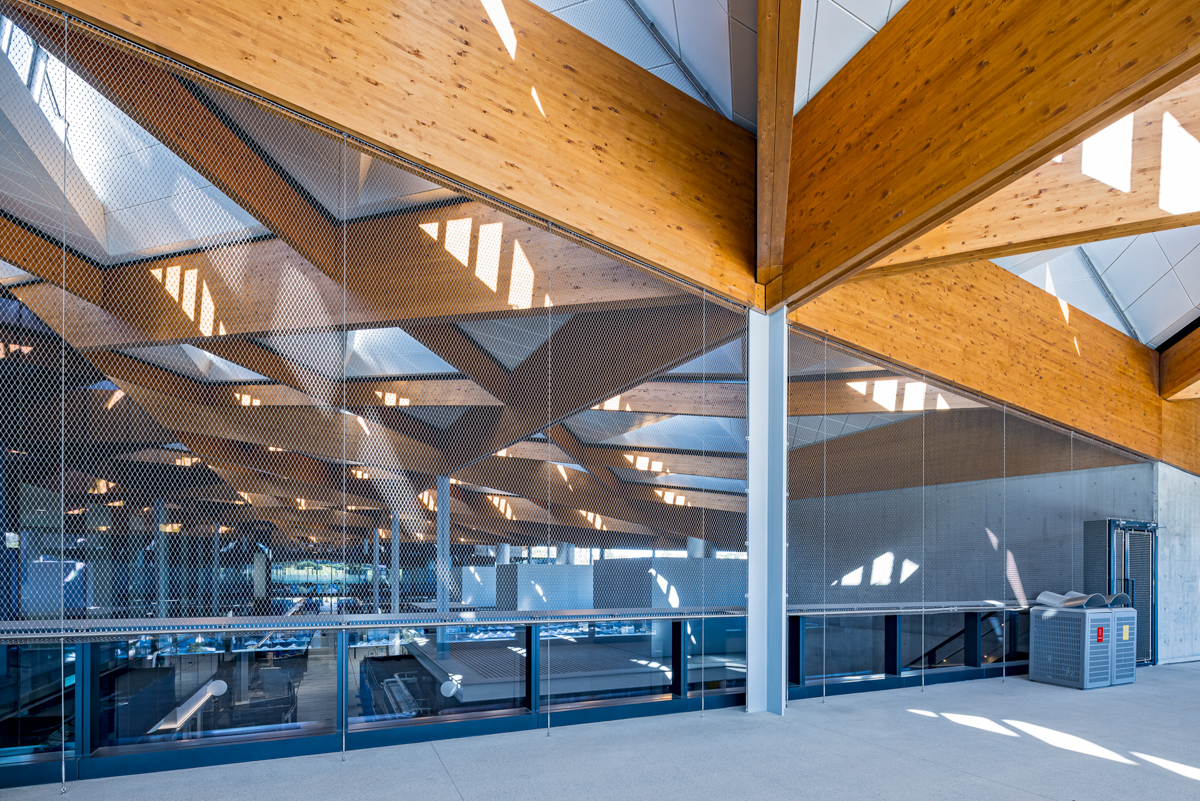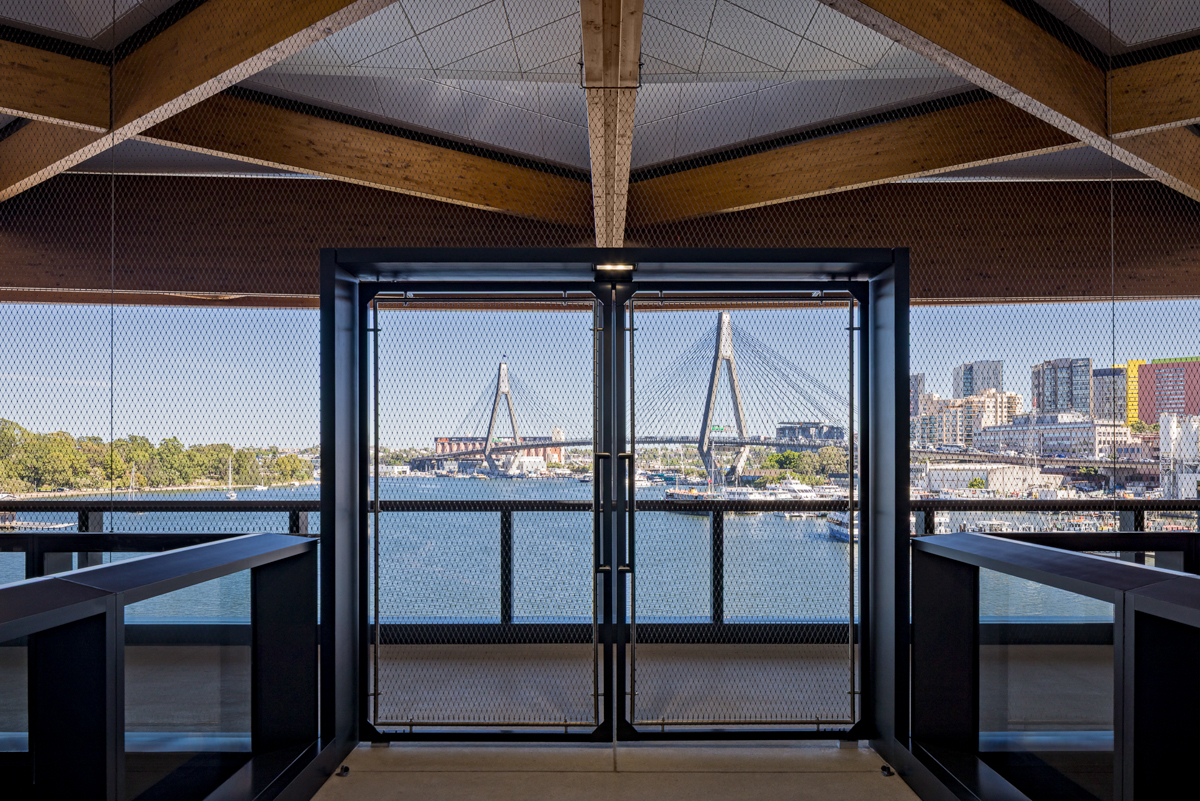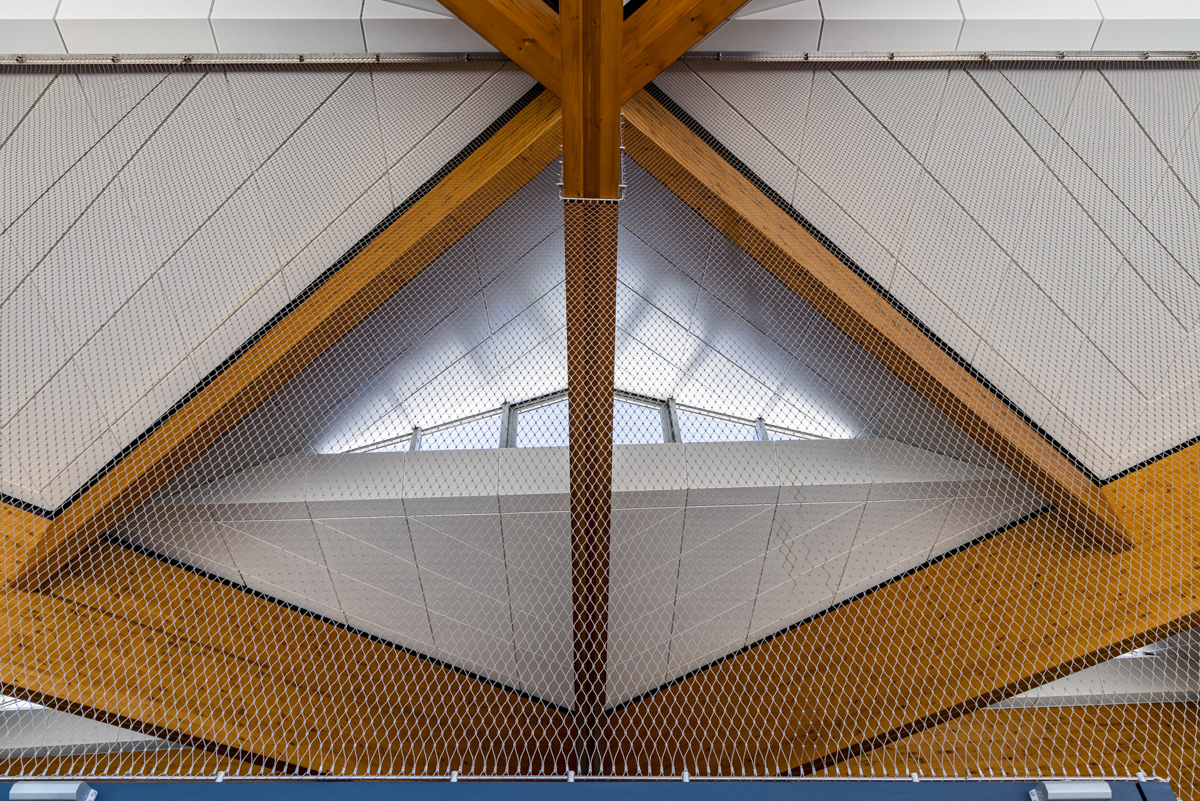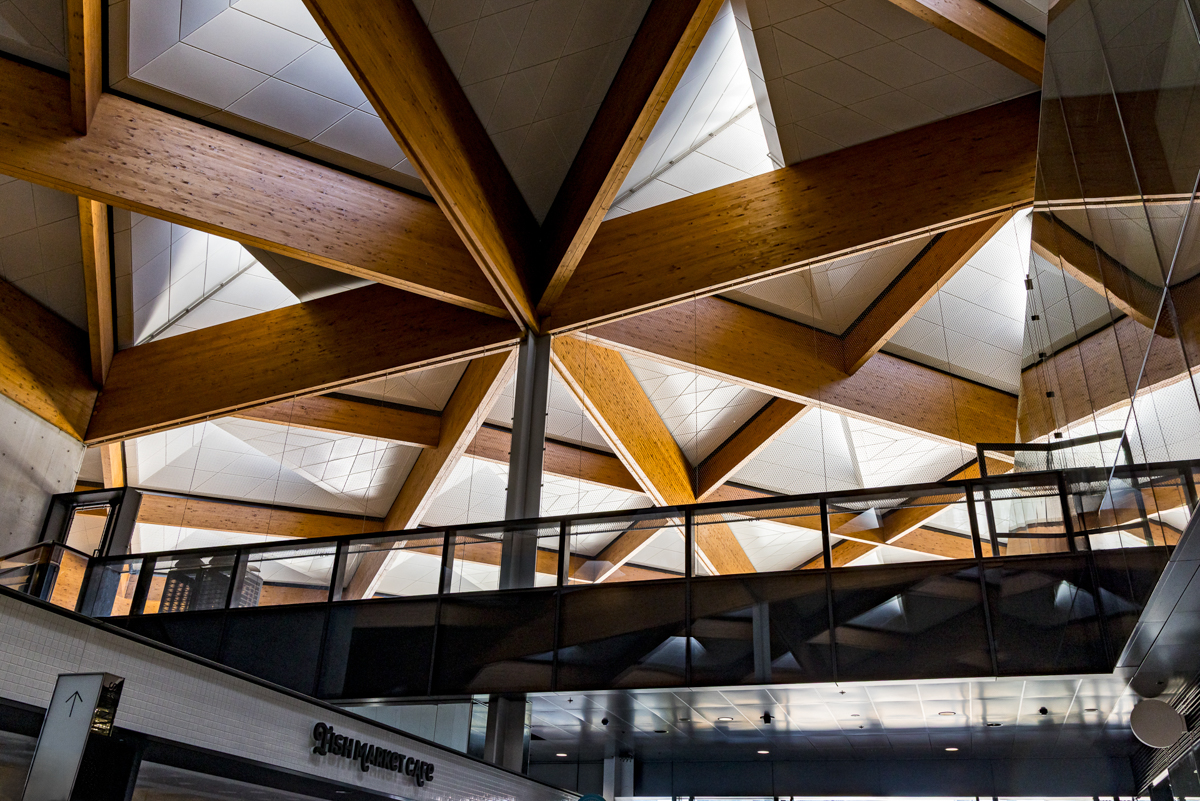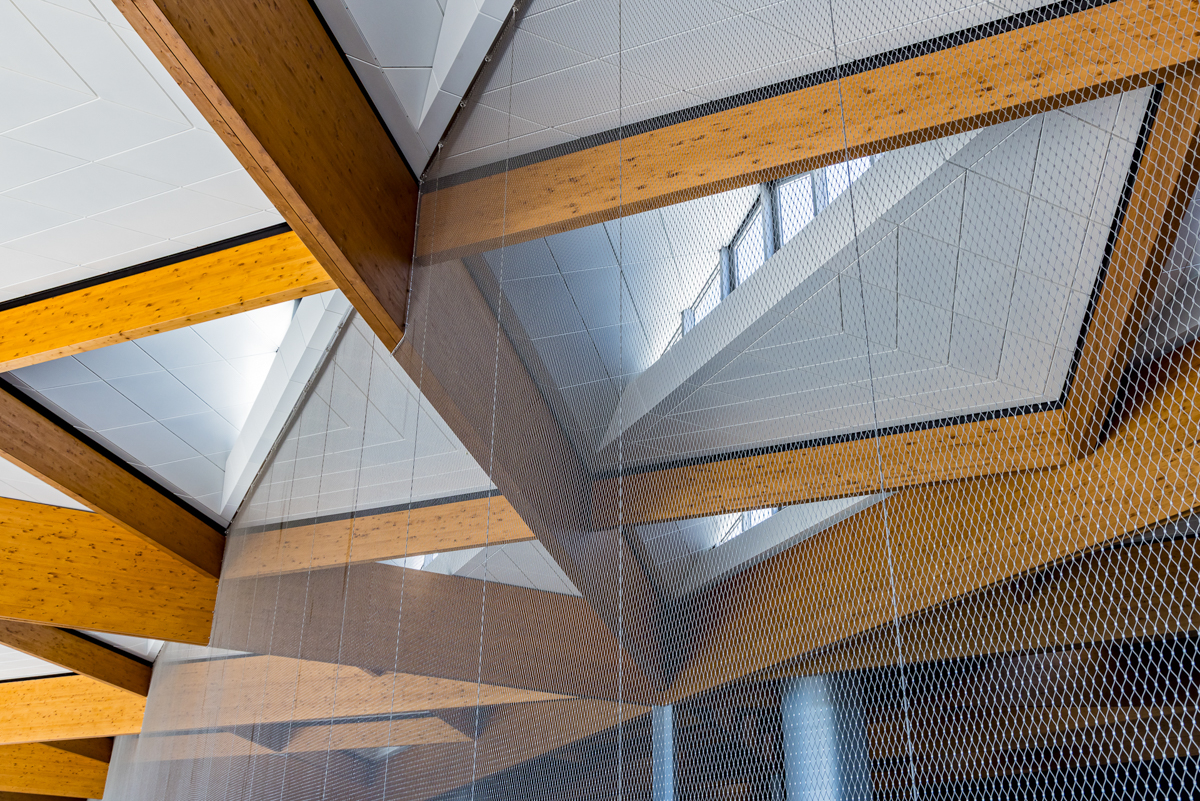

A delicate anti-bird screen integrated into one of Australia’s most ambitious timber structures.
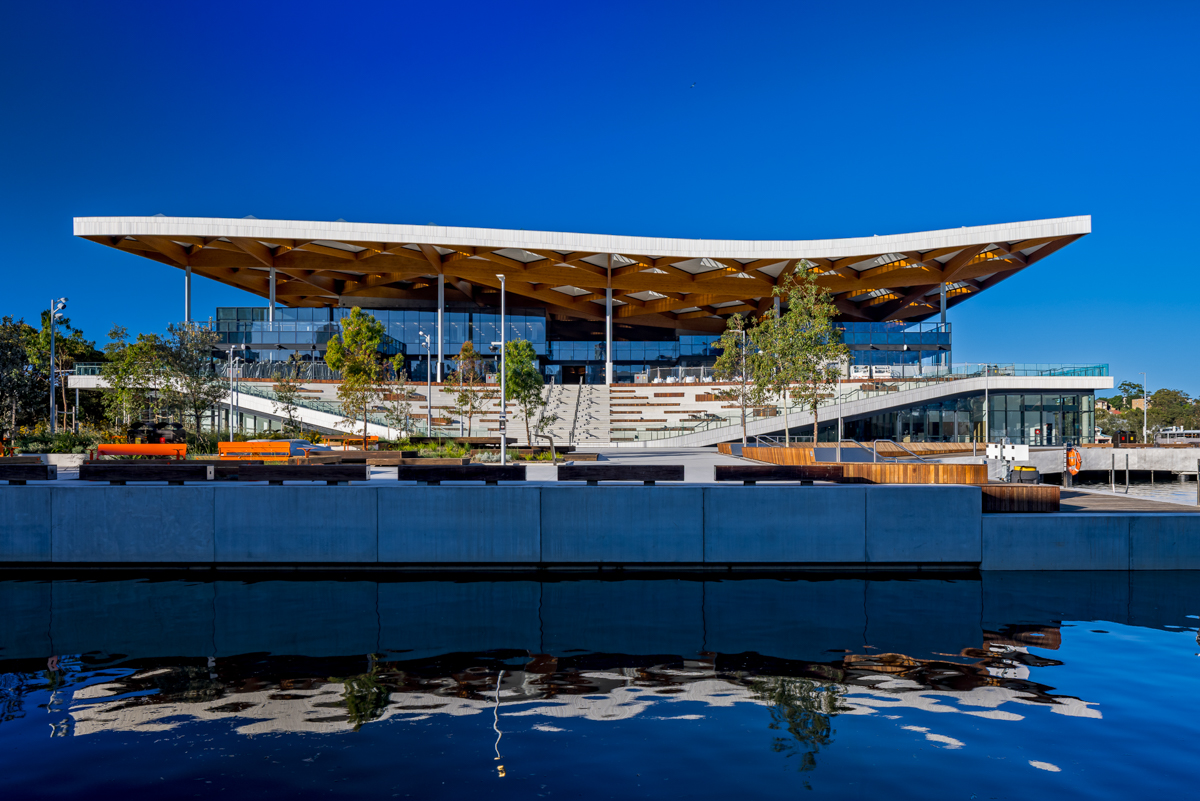
The new Sydney Fish Market is a landmark civic project for Sydney — a globally recognised food, tourism and public-realm destination designed by 3XN / BVN and delivered by Multiplex on behalf of the NSW Government.
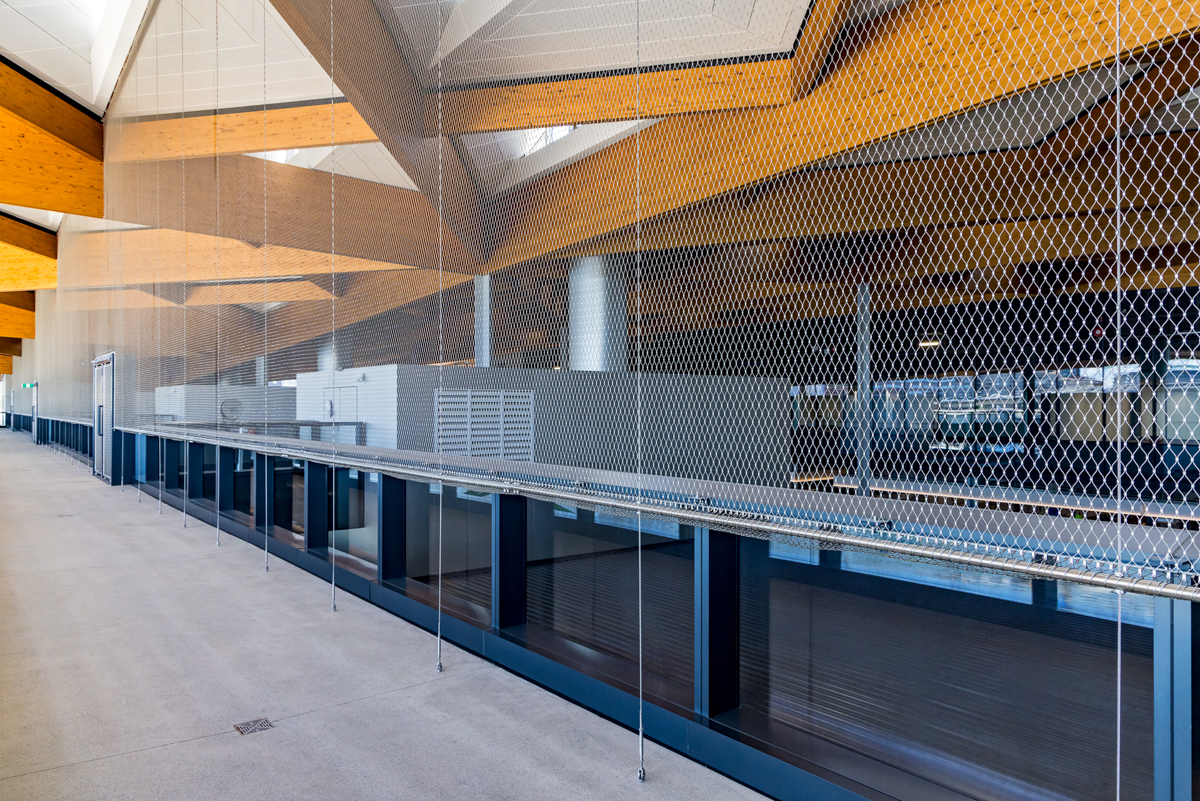
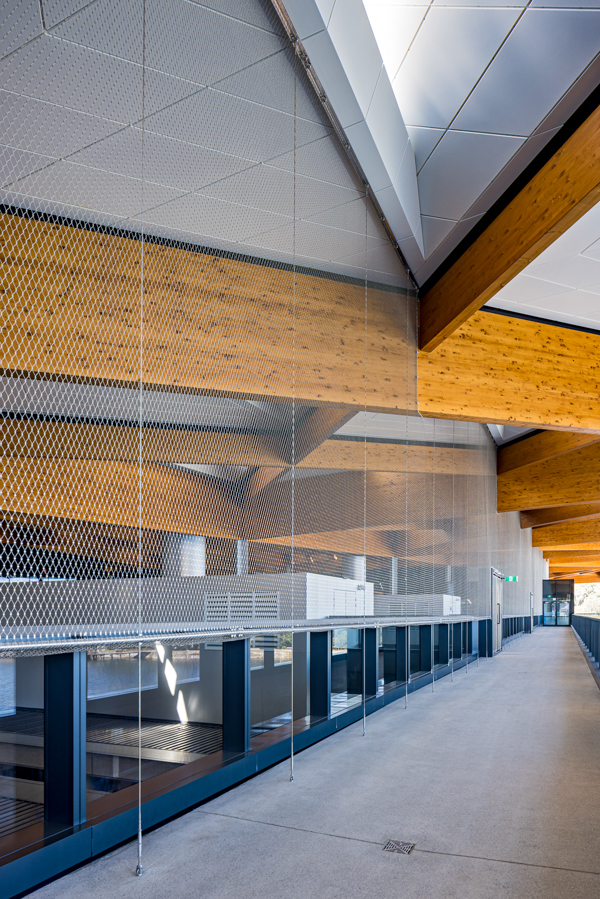
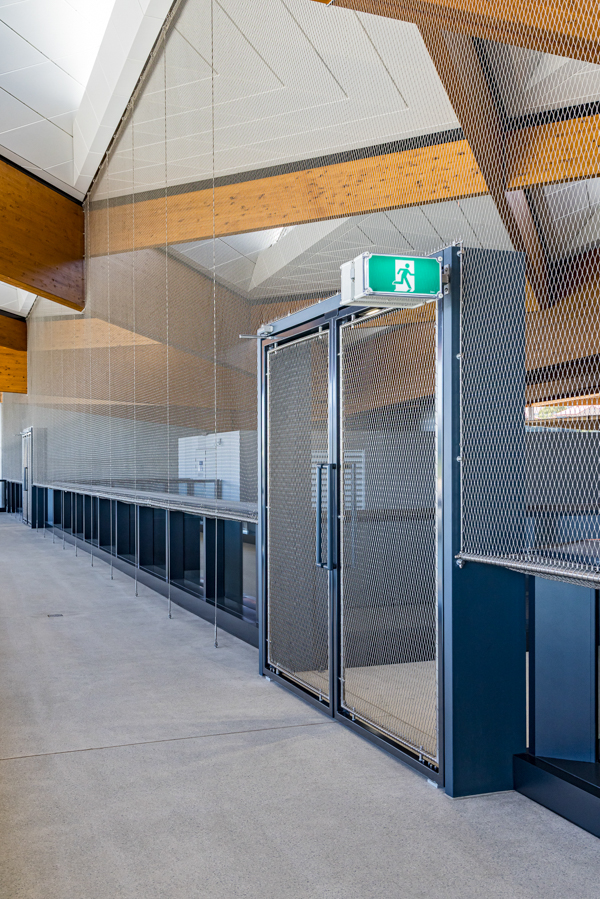
Sitting on the edge of Blackwattle Bay, the building’s sweeping timber canopy and terraced waterfront design required careful coordination between structure, architecture and environmental control. Tensile was engaged to design and install a highly transparent Webnet anti-bird screen system across the upper terraces — a critical functional detail that enables the building’s public areas while preserving the purity of 3XN’s form and the project as a working fish market.
A Complex Architectural Form Requiring a Light Hand
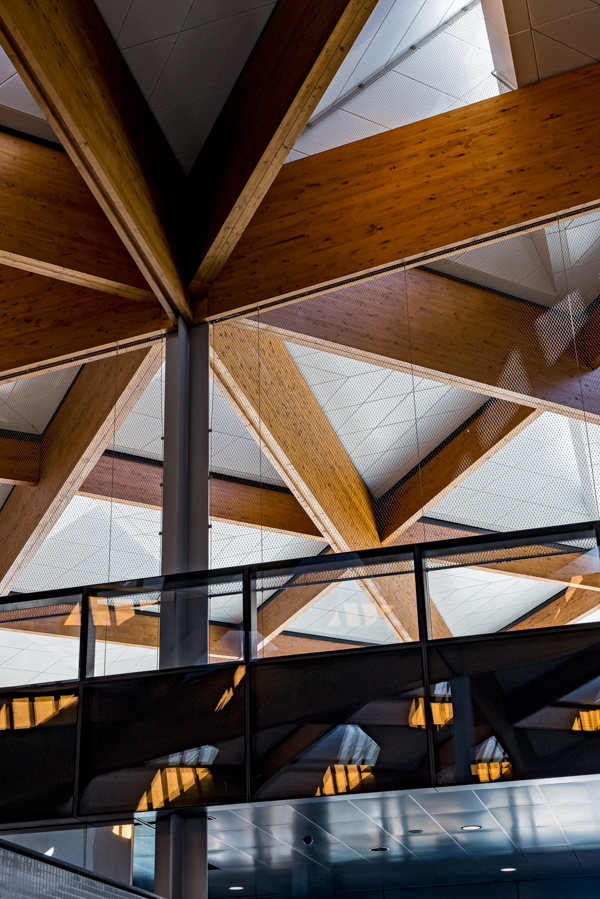
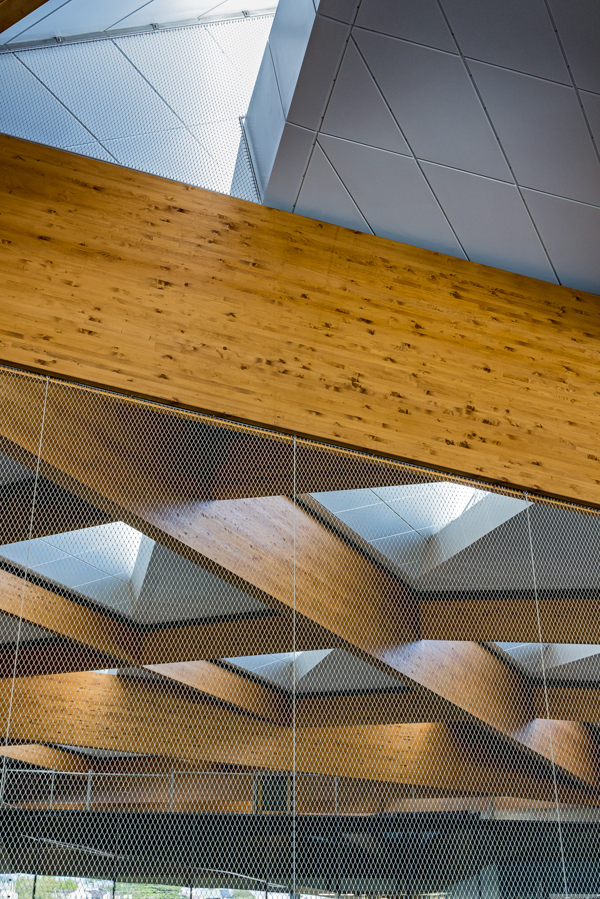
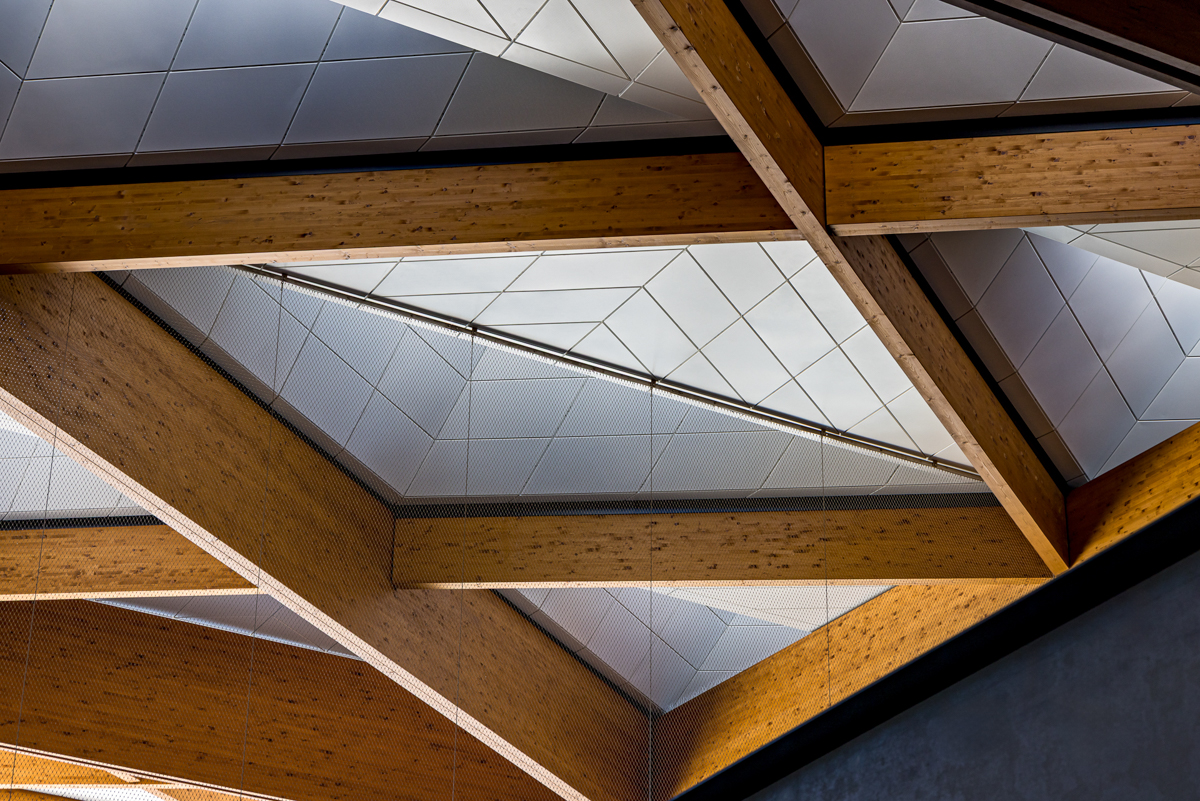
One of the new Sydney Fish Market’s defining features is its large-span timber roof — the largest roof of its kind in the Southern Hemisphere— made from an expressive diagrid of glulam timber beams. This geometry creates deep overhangs and a series of stepped terraces that blur indoor and outdoor space.
These terraces needed protection from bird entry without introducing visible clutter or compromising the sculptural roof above. The challenge for Tensile was striking the right balance between:
- Environmental control (keeping birds out)
- Architectural transparency
- Minimal structural presence
- Complex interfaces with the timber diagrid
Tensile’s Solution
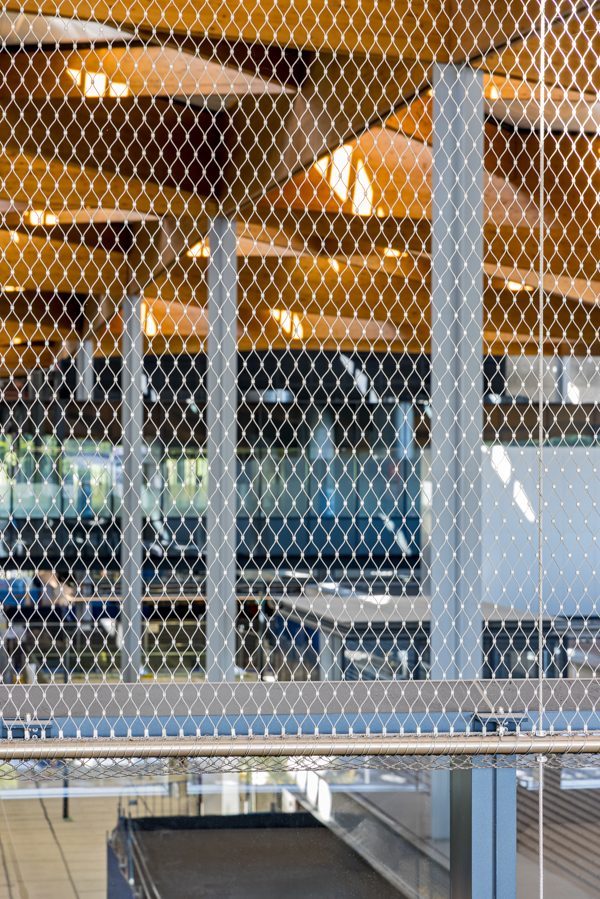
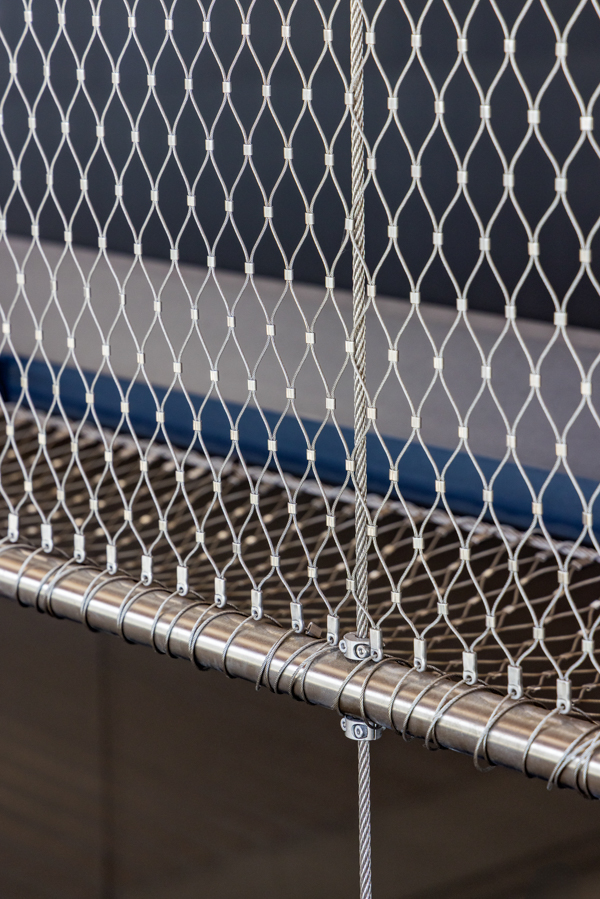
Tensile designed and installed a 30mm aperture, 1.5mm wire Webnet system that delivers reliable anti-bird performance with near-complete visual disappearance.
Key aspects of the solution include:
- Over 1,000m² of Webnet custom-shaped to the building’s stepped terrace edges
- Fine-gauge stainless steel ensuring maximum open area while remaining robust in a marine environment
- Precision perimeter detailing that integrates directly into surrounding timber and steel elements
- Zero secondary structure wherever possible, maintaining the clarity of the timber beam geometry
Every connection point was carefully coordinated to ensure the mesh reads as part of the architecture, not an afterthought. Integration was everything. This project demanded a level of detailing beyond typical anti-bird screens. The geometry of the timber roof meant that:
- No two fixing points were identical
- Mesh panels needed to be shaped and tensioned across shifting planes, this was conducted off site to maximise speed of installation
- The interface tolerances with timber, steel, glazing and façade systems were extremely tight and needed to allow for movement over time
Through early coordination with 3XN, BVN, Multiplex and the subcontractor network, the Webnet was woven seamlessly into the building envelope. The final result sits quietly — exactly as intended.
Outcome
The anti-bird screen is almost invisible to visitors, preserving the sweeping views and sculptural expression of the new Sydney Fish Market while performing a vital environmental role. What could have been a visually intrusive component instead becomes a fine, tensile layer that reinforces the architectural intent.
This project demonstrates how Webnet — when carefully designed and integrated — can provide high-performance environmental control without compromising material clarity, sightlines or form.